May 12, 2026 · Insurance Estimates
How to Actually Read Your Insurance Estimate
The first time you read an insurance estimate, it can feel like a foreign language. Cryptic part numbers, abbreviations like LKQ and R&I, dollar amounts split across columns labeled "labor," "parts," and "paint/materials," and a bottom line that may or may not be what you actually receive. Here's a plain-English guide to what each section means and where to focus.
Start with the parts list. Every line should tell you what the part is and how it's being sourced. "OEM" or "NEW" means a brand-new part from the original manufacturer — the same one the car was built with. "A/M" or "AFTM" is aftermarket, a third-party copy that may or may not fit and finish the way the original does. "LKQ" stands for Like Kind and Quality, which is industry speak for used. None of these are automatically wrong — but you deserve to know which is being proposed for your car and why.
Next, look at the labor hours. Each operation has a time allowance, usually in tenths of an hour, multiplied by the shop's labor rate. The hours come from estimating databases (Mitchell, CCC, Audatex) that are built from industry averages. They're a reasonable starting point, not gospel. Some procedures — corrosion protection, weld-through primer, recalibrations on cars with driver-assist features — frequently get left off the initial estimate entirely because the adjuster didn't see the damaged area up close.
Watch for "R&I" (remove and install) versus "R&R" (remove and replace). R&I means a part comes off and goes back on; R&R means it's being replaced with a new one. Watch for "betterment" — a deduction the insurer takes when a new part allegedly leaves your car in better condition than it was (a common one is tires or batteries). And watch for sublet operations: items like wheel alignments, ADAS calibrations, or glass work that the shop sends out and bills back through.
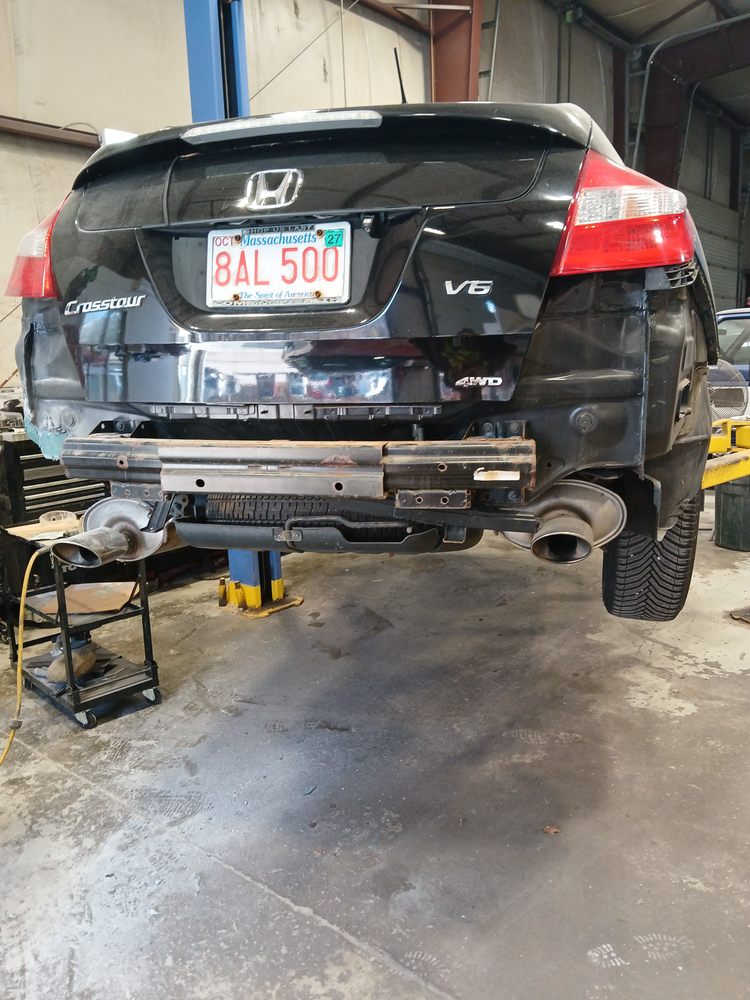
The single biggest thing to understand is that the first estimate is almost never the final number. Adjusters write from a visual inspection, often in a parking lot, often without removing a single bolt. Hidden damage — bent reinforcements, cracked brackets, damaged wiring — only shows up once the car is on a lift and the bumper cover is off. When that happens, the shop files a supplement, and the insurance company approves additional dollars. This is normal and expected. A small initial estimate followed by supplements is not a sign anything is wrong.
Where it goes sideways is when the driver tries to negotiate the estimate themselves, or when a shop accepts the initial number and just does less work to fit inside it. Bring the estimate to us before you commit to anything. We'll walk you through it line by line at no charge, tell you what we'd push back on, and once you give the go-ahead, we'll handle the supplements and the adjuster conversations directly. That's the part you're hiring a shop for.
Got a question for Frank?
Stop in, give us a call, or send a message. Estimates are always free.